What Affects the Cost of Damage Restoration
Every restoration job is sized by the damage: how far the water or smoke reached, what it carried, how long it sat and how much has to be rebuilt.
The Scope of the Work Sets the Cost
In restoration, the cost follows the work a job needs, and the work follows the damage. How far the water or smoke spread, what it soaked into and what has to come out all change the size of a job, which is why a description of a stain cannot settle it.
We learn most of that on the first visit, when moisture readings show where the water actually went. Until then, a handful of factors explain most of the difference between a small job and a large one.
The Factors That Make a Job Larger or Smaller
Each one can move a job in either direction, and most jobs involve several at once.
| Factor | How it changes the job | Example |
|---|---|---|
| Size of the affected area | More wet or smoky space means more drying equipment, more material removed and more to rebuild | A wet closet floor, compared with a basement where water reached every room |
| Type of water or damage | Clean water can often be dried in place; sewage means removing porous materials and cleaning everything they touched; fire adds soot cleaning and odor removal | A burst supply line, compared with a sewage backup in the same basement |
| How long materials were wet | Materials dried soon after a leak often stay; the longer they sit wet, the more of them swell, break down or grow mold | A dishwasher leak found the same evening, compared with one that dripped under the floor for weeks |
| Materials involved | Concrete, tile and framing usually dry and stay; drywall, insulation, padding and laminate are more often replaced | A tiled laundry room, compared with a finished basement with carpet and drywall |
| Access to the area | Water inside a bulkhead, under cabinets or in a unit below has to be reached before it can be dried | An open basement, compared with a ceiling cavity between two condo units |
| Amount of rebuild needed | Drying alone can finish a job; every wall, floor or ceiling that had to come out adds rebuild work | A dried and repainted wall, compared with a basement whose lower drywall, insulation and trim all came out |
Water That Is Hard to Reach Takes More Opening Up

Water does not always pool where it can be seen. It runs into bulkheads and soffits, along ductwork and pipes, under kitchen cabinets and down through a ceiling, which is how one leak in a high-rise condo along the lake can turn into work in two units.
Every one of those places has to be opened before it can be dried. A bulkhead taken down to its framing, cabinets pulled from a wall or a ceiling cut back to the joists all add tear-out at the start of a job and rebuild work at the end of it, even when the stain that started it was small.
Similar-Looking Damage Can Hide Different Jobs
Why can two jobs that look alike end up so different in scope?
Because the visible part is only the surface. One ceiling stain may be a small leak that has already dried; another may sit under a joist bay full of wet insulation. What the water was, how long it sat and where it traveled decide the work, and none of that shows in a stain.
Why does a sewage backup take more work than a clean-water leak of the same size?
Sewage carries bacteria into everything porous it touches, so the drywall, insulation, carpet and padding in its path are removed rather than dried, and the rest is cleaned. A clean-water leak of the same size can often be dried with much less taken out.
Can the scope change once the work starts?
Sometimes. Opening a wall can show that water traveled farther than the surface readings suggested, or that an older leak had already been at work. When that happens, the plan has to grow to cover what was found.
Does a leak that is caught early make for a smaller job?
Usually. Materials dried soon after a leak are more likely to stay, and mold has less time to start. A leak left for weeks tends to mean more tear-out, more cleaning and more rebuilding.
Containment and Cleaning Add Their Own Steps
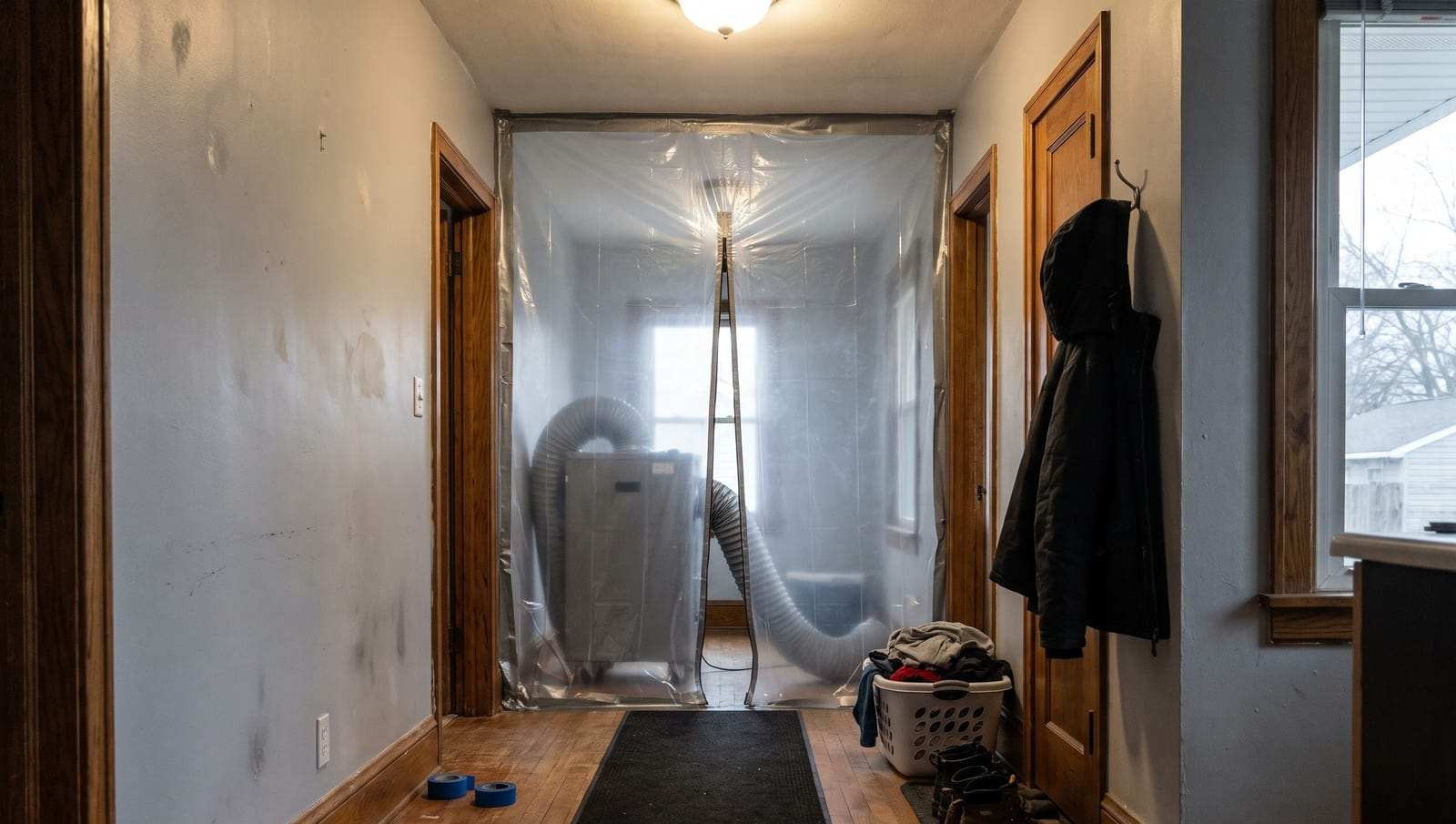
Some jobs need more than drying. Mold remediation and sewage cleanup are often done inside containment: plastic sheeting across the work area with a zipper door, and air scrubbers with HEPA filters to keep dust and spores from reaching the rest of the building.
Fire jobs add soot cleaning on walls and ceilings and odor removal at the source. Each of these adds steps and equipment to a job, even when the damaged area itself is small.
Sizing Up a Job Before Anyone Comes Out
None of these has to be exact. Together they give us a first sense of the size of the area, the type of water or damage, how long things have been wet and how hard the area is to reach, so even a rough answer helps.
- How many rooms the damage reached, and whether it crossed into another floor or a neighboring unit
- The source, if you know it: a supply line, an appliance, a drain backup, the roof or a fire
- When it started, or when you first noticed it
- Whether the property is a house, a condo, an apartment building or a commercial space
- Photos of the damage and the materials involved, if you can take them safely: email them to us
However large the job turns out to be, it starts with a call about what happened.