Emergency Service for Damage That Is Still Spreading
A pipe still running, a basement taking on water, a sewage backup or a fire just put out all call for the same start: keep people safe and stop the damage from spreading. Then the extraction, board-up and drying can begin.
Our phone is answered seven days a week, into the evening. If anyone is hurt, something is still burning or you smell gas, call 911 first.
Checking How Urgent the Damage Is
Answer yes or no to what is happening right now, and the result says whether to call at once or book a time; a question left blank counts as no.
Answer the questions, then press the button.
Making the Building Safe Before the Restoration Starts
People come first, then the source of the damage, then the restoration. In a Chicago winter, a pipe that froze inside an exterior wall can split and keep running long before anyone notices, so it pays to know where the main water valve is before you need it.
| Emergency | Immediate safety step | Then |
|---|---|---|
| Burst pipe | Close the main water valve, and switch off power to wet rooms if the panel is in a dry spot | Water extraction, moisture mapping and structural drying |
| Flooded basement | Stay out of the water if outlets, cords or appliances are in it, and call the electric utility if the panel is in the wet area | Pumping out, removal of soaked carpet, padding and lower drywall, then drying |
| Sewage backup | Keep people and pets away, and stop running water down sinks, toilets and the washer | Sewage backup cleanup, removal of porous materials the water touched, cleaning and drying |
| Fire and smoke | Get everyone out, call 911 and stay out until the fire department says the building is safe | Board-up, soot and odor removal, and drying the water used on the fire |
| Storm or roof leak | Catch the drip, move belongings away and keep out of rooms with a sagging ceiling | Board-up or covering the opening, drying and storm damage repair |
Damage That Counts as an Emergency, and Damage That Can Wait
What counts as a restoration emergency?
Damage that is still spreading or putting people at risk: water still running or rising, sewage in the living space, a fire just put out, a storm opening that lets rain in, or water near wiring. These get worse the longer they wait, because wet and dirty materials keep soaking and the damage keeps reaching new rooms.
Is a slow leak under a sink an emergency?
Usually not, as long as the valve under the sink is closed and the dripping has stopped. It is still worth booking a moisture check soon, since a leak that ran for weeks can leave the cabinet floor, the subfloor and the wall behind it wet enough to grow mold.
What if the water stopped on its own?
The source stopping is not the same as the damage stopping. Water already in drywall, insulation and subfloor keeps wicking into dry material until it is dried out, so wet walls or floors still need attention soon, even when nothing is dripping.
Should I call 911 or a restoration company first?
Call 911 first if anyone is hurt, anything is still burning, you smell gas or part of the building may collapse, and call the utility when water has reached wiring or gas appliances. Restoration work starts once the building is safe to work in, and you can call us as soon as the emergency services have done their part.
A Flooded Basement With the Power Still On

A flooded basement puts water and electricity close together. Outlets sit low on the walls, and the washer, dryer, furnace and water heater often stand in the water, so the first rule is to stay out until the power to the basement is off.
Many older Chicago bungalows and two-flats have finished basements with a floor drain, and in heavy rain that drain can back up with water from the sewer. Treat it as sewage: keep people and pets out, and do not wade in to rescue belongings.
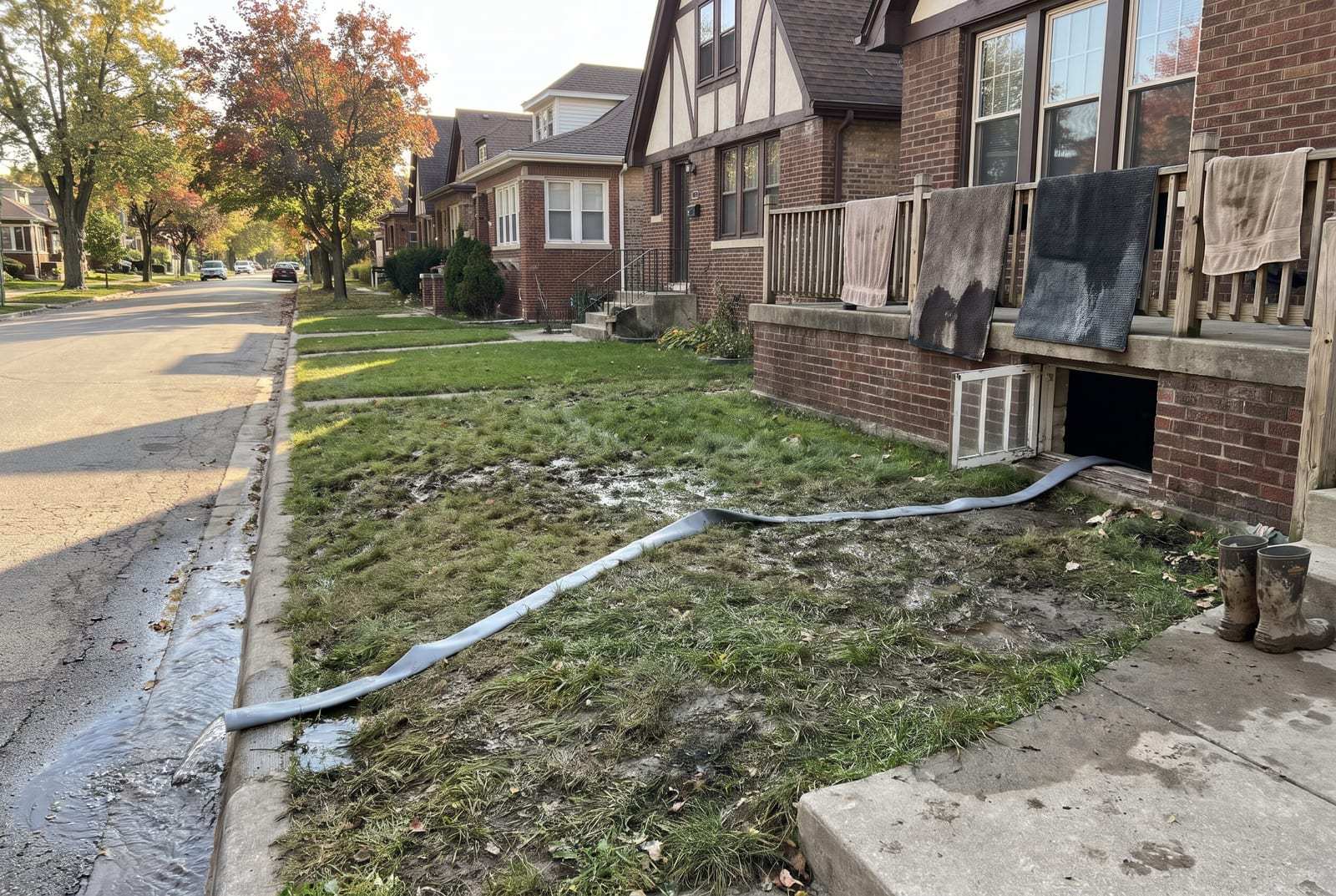
Once it is safe, the water is pumped out, often through a hose run out of a basement window, and soaked carpet, padding and the lower drywall come out so the walls and floor can go through structural drying. A furnace, water heater or washer that stood in the water should not be switched back on until it has been checked.
Limiting the Damage While You Wait
A few steps help in the meantime, as long as each one can be done without stepping into water or touching anything wet and plugged in.
- Turn off the water at the main valve, usually where the water line enters the building, near the meter.
- Switch off the power to wet areas at the panel, but only if you can reach it from a dry spot.
- Move valuables, papers, photos and electronics out of the wet area and onto a dry floor.
- Do not use appliances, outlets or light fixtures in the affected rooms.
- Photograph the damage, the water line on the walls and the source, for your records.
When you call, the first questions are what happened, when it happened and which rooms are affected, and the answers shape how we work on the job from there.
Close the main valve, keep clear of anything wet and plugged in, and call.