How We Work on a Restoration Job
Every job follows the same order: questions first, then a look at the damage in person, then the equipment and the drying, and the rebuild only once the structure is dry.
A Call or a Message That Starts With Questions
A job starts when you call or message us. Before anything else, we ask three things: what happened, when it happened and which rooms are affected.
What happened tells us what kind of water or damage we are dealing with. Clean water from a burst supply line, gray water from a washing machine and sewage from a backed-up floor drain are known in the trade as Category 1, 2 and 3 water, and each is handled differently. Smoke and soot change the work again.
When it happened matters because water keeps moving while it sits. Drywall wicks it upward and wood and subfloor take it in, so a leak caught as it starts is a different job from one that soaked a floor over a long weekend.
Which rooms are affected tells us where to look first and what may be underneath: a finished basement, a ceiling under a bathroom, the unit below in a condo building. If water is still coming in, say so first, because an active leak has to be stopped before anything else.
A Visit to See the Damage and Measure the Moisture
Next, Brian Cox, our owner, comes out to the property to look at the damage in person. A description over the phone is a starting point, but most water damage is out of sight, and its real edges only show up on a meter.
He checks walls, floors and ceilings with moisture meters. Some meters read through the surface and some take readings with two pins pushed into the material, and between them they find water in drywall, plaster, wood and subfloor that look and feel dry. The readings are followed room by room until they reach dry material on every side.
He explains what he finds and lays out the steps ahead: what can be dried in place, what has to come out, where the equipment will go and what gets rebuilt afterward.
Work Starts Once You Agree to the Plan
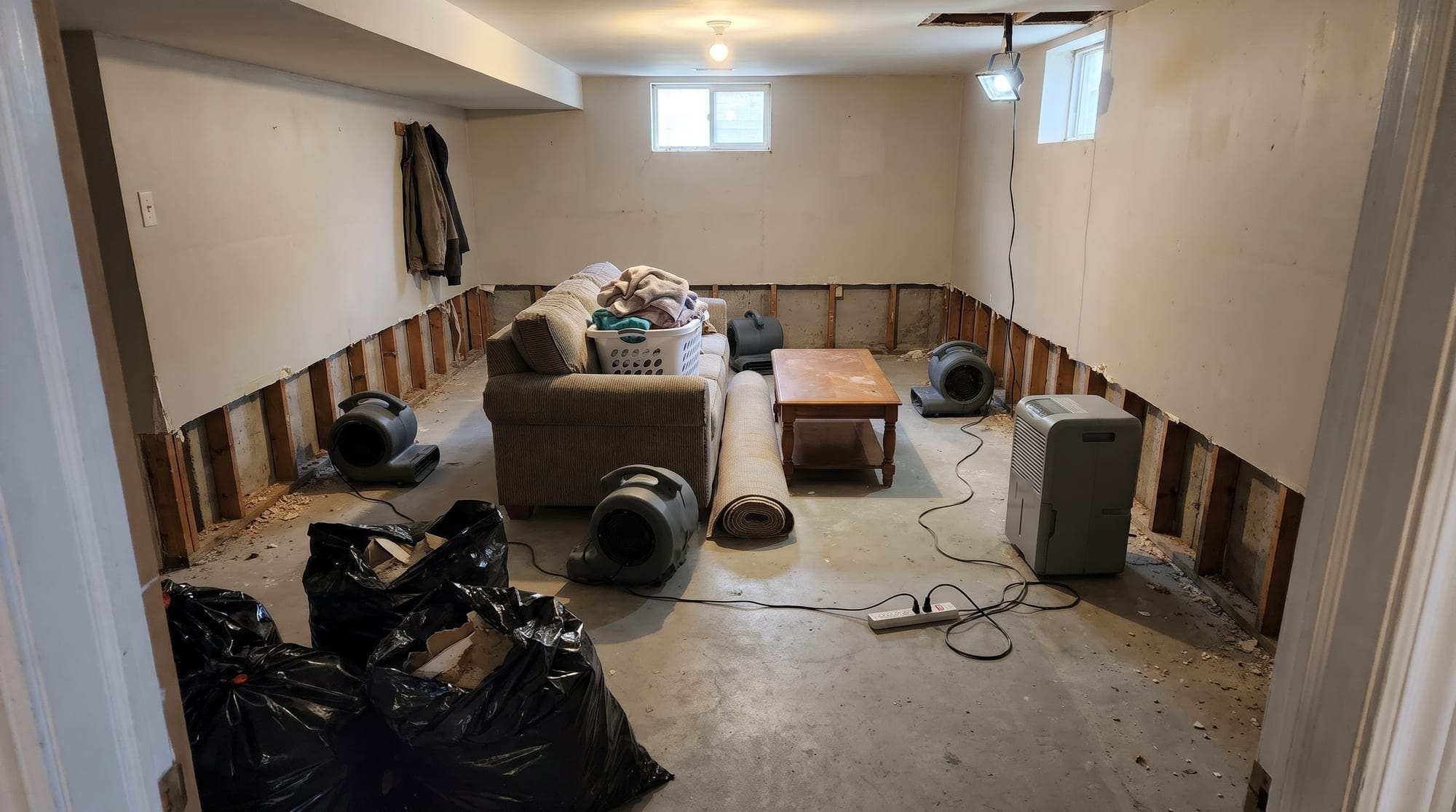
Once you agree to the plan, we bring in the equipment and begin. On a water job that usually means pulling up the standing water first, then removing what cannot be dried in place, such as soaked carpet padding, wet insulation and drywall that has wicked water up from the floor.
Where drywall has to come out, the cut is usually made along a straight, level line a little above the highest wet reading, so the wall can be closed up cleanly later.

Then the structural drying starts. Air movers push air across the wet surfaces and into the opened wall cavities, and dehumidifiers pull the moisture out of the air before it can settle back into the wood. The equipment is loud and runs without a break, and doors and windows are usually kept closed so the dehumidifiers are not drying the outdoors.
Other jobs add their own steps. A sewage backup means removing the porous materials the water touched and cleaning what stays. Mold work happens inside plastic containment with HEPA filtration, so spores stay out of the rest of the home. After a fire, soot comes off what can be saved, charred material comes out and the odor is treated at its source, and after a storm an open window or wall may need a board-up first.
The Walls Go Back Up When the Structure Reads Dry
The drying is checked with readings, not by touch and not by a set number of days. We keep taking them on the walls, floors and ceilings that were wet until the structure is dry, because closing up damp framing only hides the water; it does not stop the damage.
This is the careful, steady part of restoration, and it comes before any rebuilding starts. How long it takes depends on how much got wet, what it soaked into and how long it sat, which is why the readings, not a calendar, decide when the rebuild begins.
Then we rebuild the walls, floors and ceilings that had to come out. That usually means new insulation and drywall, hung, taped and finished, and the floors and ceilings put back, with repairs such as patching and repainting for the surfaces the damage only marked.
Call or send a message, and the first questions get the job moving.