Water Damage Restoration and Structural Drying
We take out the water, trace how far it traveled and dry the walls, floors and ceilings before anything is rebuilt. Burst pipes, flooded basements, appliance and roof leaks, and sewage backups all start there.
Where the Water Came From and What It Reached
The source of the water decides two things: how clean it is and where it went. A supply line under pressure can spray into a wall cavity, a roof leak follows the framing before it drips, and a basement flood rises from the floor up.
When water is still running or rising, stopping it comes first, and that is emergency service work. Once the source is stopped, the job is finding every wet material and drying it.
| Water source | Typical job | Materials usually affected |
|---|---|---|
| Burst pipe | Water extraction, opening the wall or ceiling around the wet area, structural drying | Drywall, insulation, framing, flooring and the ceiling underneath |
| Appliance leak | Drying under and behind the washer, dishwasher, refrigerator or water heater | Subfloor, cabinet bases, baseboards and the lower wall |
| Basement flood | Pumping out, removing wet carpet, padding and lower drywall, then drying | Carpet and padding, lower drywall, insulation and bottom plates |
| Sewage backup | Removing porous materials the sewage touched, then cleaning, disinfecting and drying | Carpet, padding, drywall, insulation, trim and anything stored on the floor |
| Roof leak | Following the water along the framing, opening the ceiling, drying the attic and walls | Ceiling drywall, attic insulation, framing and wall cavities |
Clean Water, Gray Water and Sewage Call for Different Work
The trade sorts water into three categories. Category 1 is clean water from a supply line or a burst pipe, Category 2 is gray water such as washing machine discharge, and Category 3 is sewage or floodwater from outside, carrying whatever the sewer and the ground hold.

Basement water often belongs in Category 3. In much of Chicago, rain and sewage run through the same sewer pipes, so during a heavy summer storm a floor drain can push back water that has been through the sewer. Until it is clear where basement water came from, it is safest to treat it as sewage.
The category decides what stays. Drywall and carpet soaked with clean water and caught early can sometimes be dried in place, but porous materials that sewage reached are cut out and replaced, because cleaning cannot get at the contamination inside them. Concrete, tile and sealed framing are cleaned, disinfected and dried.
Clean water does not stay clean for long, either. Left standing, it picks up dirt and bacteria from the materials around it, and after a few days the trade treats it as a higher category.
Meter Readings Mark Where the Wet Area Ends
Water moves sideways inside walls, wicks up drywall from the floor and spreads under flooring and along joists, so the wet area is nearly always larger than the stain. Moisture mapping is how the trade finds where it ends.
We map it with moisture meters: pin meters pushed into drywall and wood, and pinless meters passed over walls and floors. Each reading is compared with the same material in a dry room, and the wet area is usually marked out on the walls and floor so the drying covers all of it.

Ceiling leaks show how far water can go. Water from a roof leak or a bathroom upstairs runs along a joist or a duct and comes out at the nearest opening, often a light fixture or a ceiling vent, some distance from where it got in.
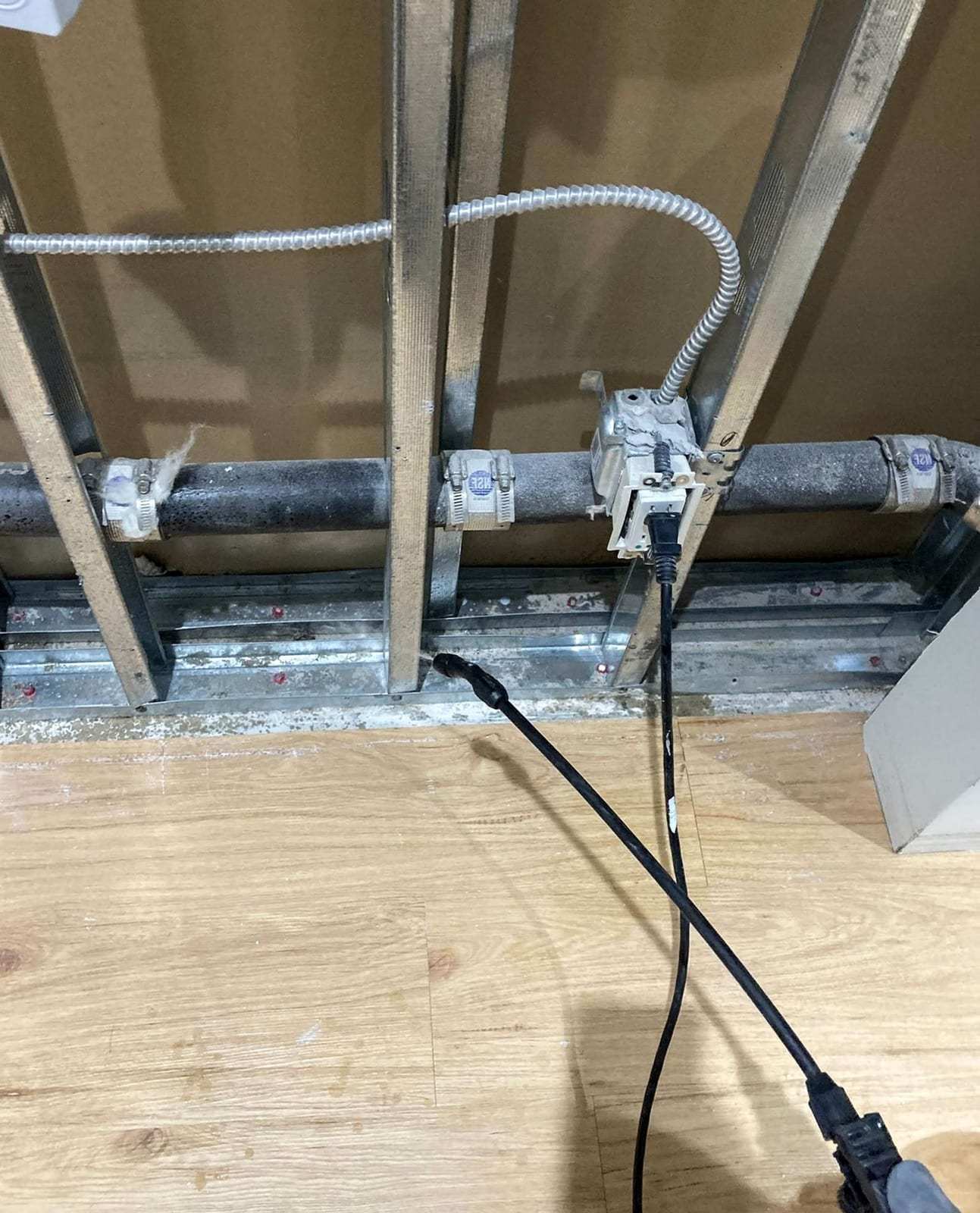
So the mapping follows the water both ways, back toward the source and out to where the readings return to normal. Drying that stops at the edge of the stain leaves wet framing and insulation behind, and that hidden moisture is where mold and rot start.
Extraction First, Then Air Movers and Dehumidifiers
Extraction comes first. Pumps and extraction wands pull out standing water and the water held in carpet, because water removed as liquid does not have to be dried out of the air later.
Then the drying is set up. Air movers push air across wet surfaces so the moisture evaporates, and dehumidifiers pull it back out of the air. Where water is trapped in a wall cavity, the lower drywall is often cut away in a straight line, called a flood cut, so air reaches the framing and wet insulation can come out.
Drying is judged by readings, not by touch. The equipment keeps running until the walls, floors and framing read the same as dry material, and only then does rebuilding begin.
A water damage job usually includes:
- Water extraction from floors, carpet and the materials holding it
- Drying and dehumidifying until the readings match dry material
- Moisture mapping with meters to find where the wet area ends
- Mold prevention by drying the hidden material, not only the surface
- Removal of materials that cannot be dried or cleaned
- Rebuilding the walls, floors and ceilings that had to come out
Mold Risk and Drying Time After a Leak
How long can water damage sit before mold becomes a concern?
Mold can start growing on wet drywall, wood, carpet and padding within a day or two, and sooner in a warm, closed room. That is why the first days after a leak matter so much for drying. Cool air slows growth down, but only drying stops it.
Why open a wall that looks dry from the outside?
Because the face of the drywall dries first. The paper can feel dry while the gypsum behind it, the insulation and the bottom plate are still wet, and moisture meters pick that up where a hand cannot. Opening the lower wall lets that hidden water dry before it turns into mold or rot.
How long does structural drying usually take?
On many jobs it takes several days, but there is no fixed number. Dense materials like hardwood, plaster and concrete hold water longer than drywall, and a cold or closed space dries more slowly. The readings decide when the drying is done, not the calendar.
Does a small clean-water leak need structural drying?
Not always. A spill wiped up from a hard floor right away usually dries on its own. Water that soaked into drywall, ran under flooring or came through a ceiling is different, because it sits where a fan cannot reach it, and only meter readings show whether it has dried.
Leaks That Reach the Unit Downstairs
In the high-rise condos and vintage courtyard buildings along the lake in Edgewater and Uptown, water rarely stays in the unit where it started. A failed supply line or an overflowing tub upstairs runs through the floor and turns up in the ceiling and walls of the unit underneath, sometimes two floors down.
Both units usually need the same moisture mapping, and both have to read dry before either is closed up. Then we rebuild what had to come out, with new drywall, insulation and flooring going in over dry framing.
The sooner the drying starts, the less has to be cut out.