
Fire and Smoke Damage Restoration
A fire leaves more than burned material behind: soot in rooms the flames never reached, smoke odor in fabrics and framing, and water from the hoses in the floors and drywall. We clean what can be saved, take out what cannot, remove the odor and rebuild.
Nobody Goes Back In Until the Building Is Declared Safe
The fire department decides when a building can be entered again, and the cleanup waits for that. Even after it is cleared, the gas and the wiring may need checks by the utility or an electrician before work starts in the affected rooms.
Soot is irritating to breathe and easy to spread. Until the cleanup starts, it helps to keep out of the affected rooms, leave the furnace and air conditioning off so the system does not carry soot through the ducts, and avoid wiping walls or furniture, which pushes the residue deeper.
A fire often leaves a broken window, a door forced open or a hole cut in the roof to let the smoke out. Board-up closes those openings against weather and intruders, and while water from the firefighting is still spreading, the first steps fall under emergency service.
Flame, Soot, Smoke Odor, Water and Heat Damage Compared
Each kind of fire damage reaches different materials and calls for different work. After a fire, several of them usually turn up together, often in the same room.
| Damage type | What it affects | Restoration work |
|---|---|---|
| Flame damage | Framing, drywall, flooring, cabinets and trim the fire reached | Removal of charred material down to sound wood, then rebuilding what came out |
| Soot | Ceilings, walls, windows and surfaces in rooms far from the fire | Dry soot removal with HEPA vacuums and dry soot sponges, then wet cleaning |
| Smoke odor | Insulation, framing, wall cavities, carpet, padding and fabrics | Odor removal: taking out what holds the smell, cleaning, air filtration and odor sealing |
| Water from firefighting | Drywall, insulation, subfloor, flooring and the ceilings underneath | Water extraction and structural drying, checked with moisture readings |
| Heat damage | Paint, vinyl, plastic fixtures and finishes near the fire | Removal of warped and blistered materials, then new drywall, trim and paint |
Soot Comes Off Dry Before Anything Wet Touches It
Soot is fine, acidic and often oily, and the wrong first step makes it worse. A wet rag on a sooty wall smears the residue into the paint, where it can stain for good.
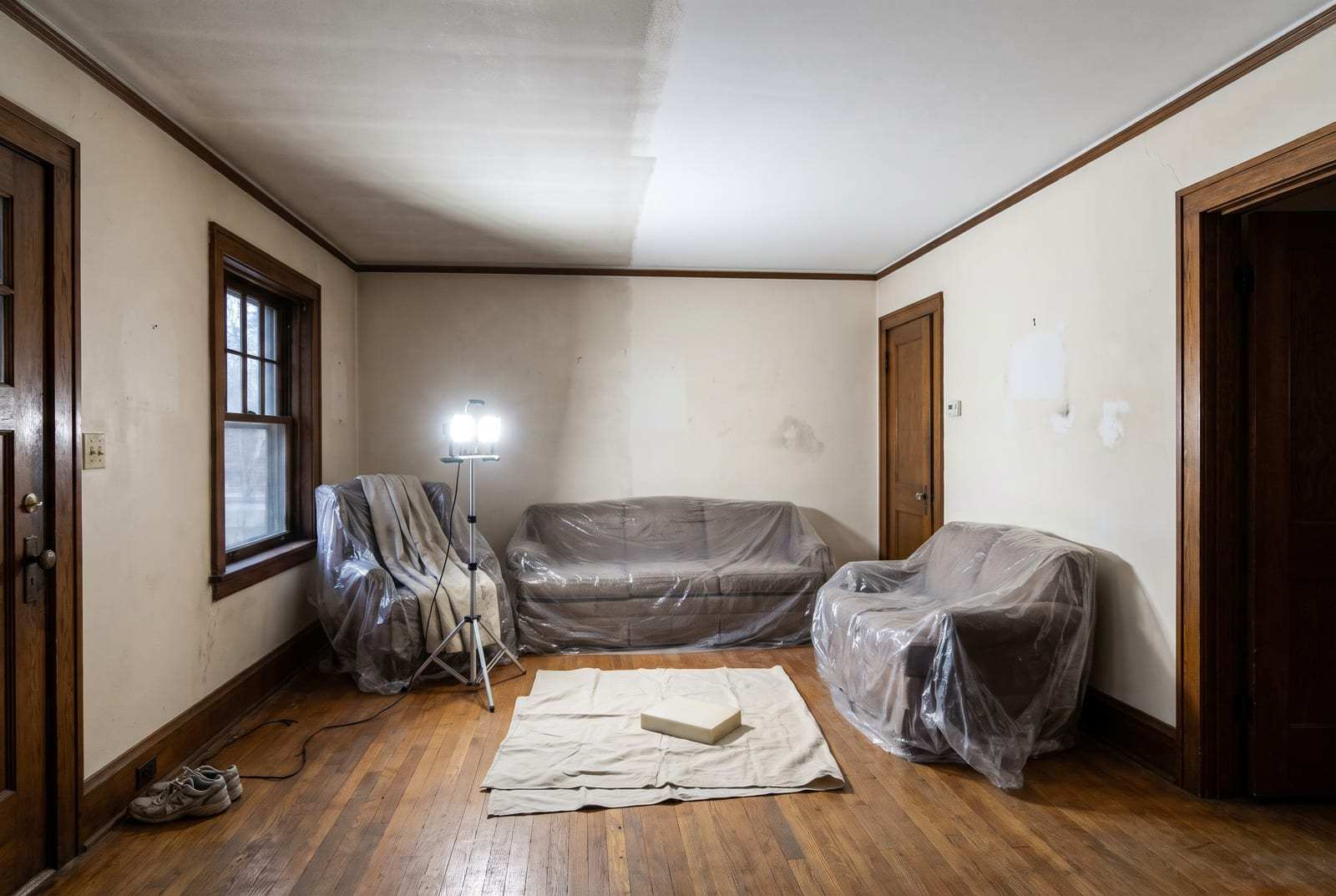
So soot cleanup usually starts dry. Loose soot comes off with HEPA vacuums, dry soot sponges lift the film from walls and ceilings, and wet cleaning follows on the surfaces that can take it. A stain that stays after cleaning is sealed with a stain-blocking primer before repainting.
Kitchen fires are a case of their own. Burning food and grease leave a thin, sticky film that is hard to see, smells strongly and coats cabinets, walls and ceilings well beyond the stove.
Getting the Smoke Smell Out of Framing and Fabrics
Smoke odor lives in porous materials: insulation, the back of drywall, carpet padding, upholstery and bare wood. Fragrance and open windows only cover it for a while, and the smell returns on the first warm, humid day.
Odor removal works from the source out. Charred and smoke-filled materials come out, the surfaces left are cleaned, air filtration runs to clear particles from the air, and exposed framing is coated with an odor sealer before the walls are closed.
Smoke also travels farther than people expect. In a two-flat or a courtyard building it often reaches the units over and beside the fire through stairwells, hallways and ductwork, and in older balloon-framed houses the open wall cavities can carry it from one floor to the next.
Cleaning Versus Tear-Out After a Fire
Which materials can usually be cleaned after a fire?
Hard, sealed surfaces usually clean well: painted walls and ceilings with light soot, glass, metal, tile, stone and finished wood. When soot has stained the paint, the surface is cleaned, sealed and repainted rather than replaced. How close the material was to the fire and how long the residue sat both matter.
What usually has to be replaced after a fire?
Anything charred, warped or melted usually goes, along with insulation that smoke has filled and carpet and padding soaked by the firefighting water. Drywall with heat damage, or heavy soot on unpainted board, usually comes out too. Framing with light surface char can often be cleaned and sealed, while deeper char is cut out or the piece replaced.
Does a small kitchen fire need professional cleanup?
That depends on how far the smoke traveled. The sticky film from grease and food smoke often reaches well past the kitchen, and household cleaners tend to smear it rather than lift it. If the film or the smell has reached other rooms, the cleanup is bigger than it looks.
Why does the smoke smell come back after cleaning?
Because some of its source is still in the building. Smoke settles in insulation, wall cavities and ductwork, and warmth and humidity draw the smell back out. Removing those sources and sealing the framing ends the smell, where more surface cleaning does not.
Drying Out the Water Used to Put the Fire Out
The water from the hoses can do as much damage as the fire itself. It runs through floors into the ceilings underneath, soaks drywall and insulation, and mixes with soot and ash on the way, so it is usually treated as contaminated water, not clean.
It gets the same extraction, moisture mapping and structural drying as any other water loss, and it has to be dry before the smoke-damaged rooms are rebuilt, because wet material sealed behind new drywall can grow mold. With the structure dry, clean and sealed, we rebuild the walls, floors and ceilings that had to come out.
A fire and smoke job usually includes:
- Soot removal from ceilings, walls and other surfaces
- Smoke odor treatment and odor sealing of the framing
- Cleaning of walls and ceilings in the affected rooms
- Removal of charred drywall, insulation, flooring and framing
- Drying of the water used to fight the fire
- Board-up of broken windows and doors
- Rebuild of the affected rooms, from framing to paint
Once the building is cleared, the soot, the smell and the water can all start coming out.