Restoration Work for Water, Fire, Mold and Storm Damage
Water, fire, smoke, mold and storm damage each call for their own mix of emergency, inspection, repair and replacement work, and the cause of the damage decides the order.
A Single Loss Can Mix Several Kinds of Work
Repair work saves what can be dried, cleaned and patched, and replacement work takes out what cannot and puts new material in. Inspection work measures how far the damage went, with moisture readings in walls, floors and ceilings. Emergency work comes first whenever the damage is still spreading: extraction, board-up and the first drying.
We handle all four, and one loss often needs each of them in turn. A burst pipe can start with emergency extraction, need readings to find the edge of the wet area, and end with part of the wall dried and patched and part of it replaced. Water damage and fire damage each run through their own order of that work.
Drying, Odor Removal and the Rebuild That Follows
Structural drying runs through nearly every job, not only floods. Water from a burst pipe, a roof leak or the hoses that put out a fire soaks into drywall, framing and subfloor, and those materials have to read dry before anything is closed up. The drying works the same way on a water damage job as after a fire: air movers, dehumidifiers and moisture readings.
Odor removal follows the same logic. Smoke, sewage and long-standing water leave odor in porous materials, and covering it with fragrance does not last. The smell goes when its source is cleaned or removed and the surfaces left behind are sealed.
A water job usually passes through the same stages on the way back. The lower wall is opened so the cavity can dry, new drywall goes up once the readings say dry, and then the seams are taped and finished.


Burst Pipes, Kitchen Fires, Storm Leaks and Other Typical Losses
Damage to a home or building usually starts with one of a handful of events, and each points to a kind of work. When a loss has two causes, such as a fire and the water used to put it out, both kinds of work run together on the same job.
| Job type | Typical situations | Page to visit |
|---|---|---|
| Water damage restoration | A burst pipe, a leaking water heater or washer hose, a slow drip inside a wall | Water Damage |
| Flood cleanup | Basement flooding after heavy rain, water through a window well or a foundation wall | Emergency Service |
| Sewage backup cleanup | A floor drain or basement toilet backing up, sewage across a finished basement floor | Water Damage |
| Fire and smoke damage cleanup | A kitchen fire, soot and smoke through the rooms, water left from the firefighting | Fire & Smoke Damage |
| Storm damage repair and board-up | A storm leak through the roof or a window, wind or hail damage, a broken window or door | Storm Damage Repair |
| Mold remediation | Mold growth after a slow leak, on a damp basement wall or in a bathroom that stays humid | Mold Remediation |
Choosing a Job Type From What Happened
Pick what happened and whether water is still coming in, and the answer names the kind of work it usually calls for.
Choose what happened, then press the button.
Telling One Kind of Damage Job From Another
How can I tell water damage from mold?
Water damage shows as stains, swelling, bubbling paint or soft drywall, usually soon after a leak. Mold shows as spotting or fuzzy growth with a musty smell, usually where materials have stayed damp for a while. The two often come together, because mold grows from water damage that was never fully dried, so the moisture is checked first either way.
Is my job a repair or a replacement?
That depends on the material, the kind of water or smoke, and how long the damage sat. Drywall wet with clean water and caught early can often be dried and patched, while insulation and anything soaked with sewage usually comes out. Moisture readings and a close look at each material settle it, room by room.
What if there is water damage and smoke damage at the same time?
That is normal after a fire, because the water used to put it out soaks the same rooms the smoke reached. Both are handled as one job, usually starting with the water, since wet materials get worse while they sit, and then the soot cleaning and odor work.
How is storm damage different from water damage?
Storm damage repair covers the opening the storm made: a roof leak, a broken window, a door or wall that took a hit. The rain that came in through that opening is handled as water damage, with the same extraction, moisture readings and drying as a burst pipe.
Mold Remediation Begins at the Moisture Source
Mold needs moisture to grow, so remediation starts with finding where the water comes from: a slow plumbing leak, a roof or window leak, condensation, or a basement wall that stays damp. Removing the growth without stopping the moisture usually means it returns in the same place.
The affected area is usually closed off with plastic containment so spores and dust stay out of the rest of the property, with air scrubbers and their HEPA filters running while the work goes on. Moldy drywall, insulation and other porous materials are cut out and bagged, and the framing behind them is HEPA vacuumed and cleaned.
Then the cause is dried with the same structural drying used on water jobs, and the framing has to read dry before new material goes in. When you smell mold but cannot see it, a moisture inspection with meters usually shows where the wet material is.
Storm Damage Repair and Board-Up After Wind and Hail
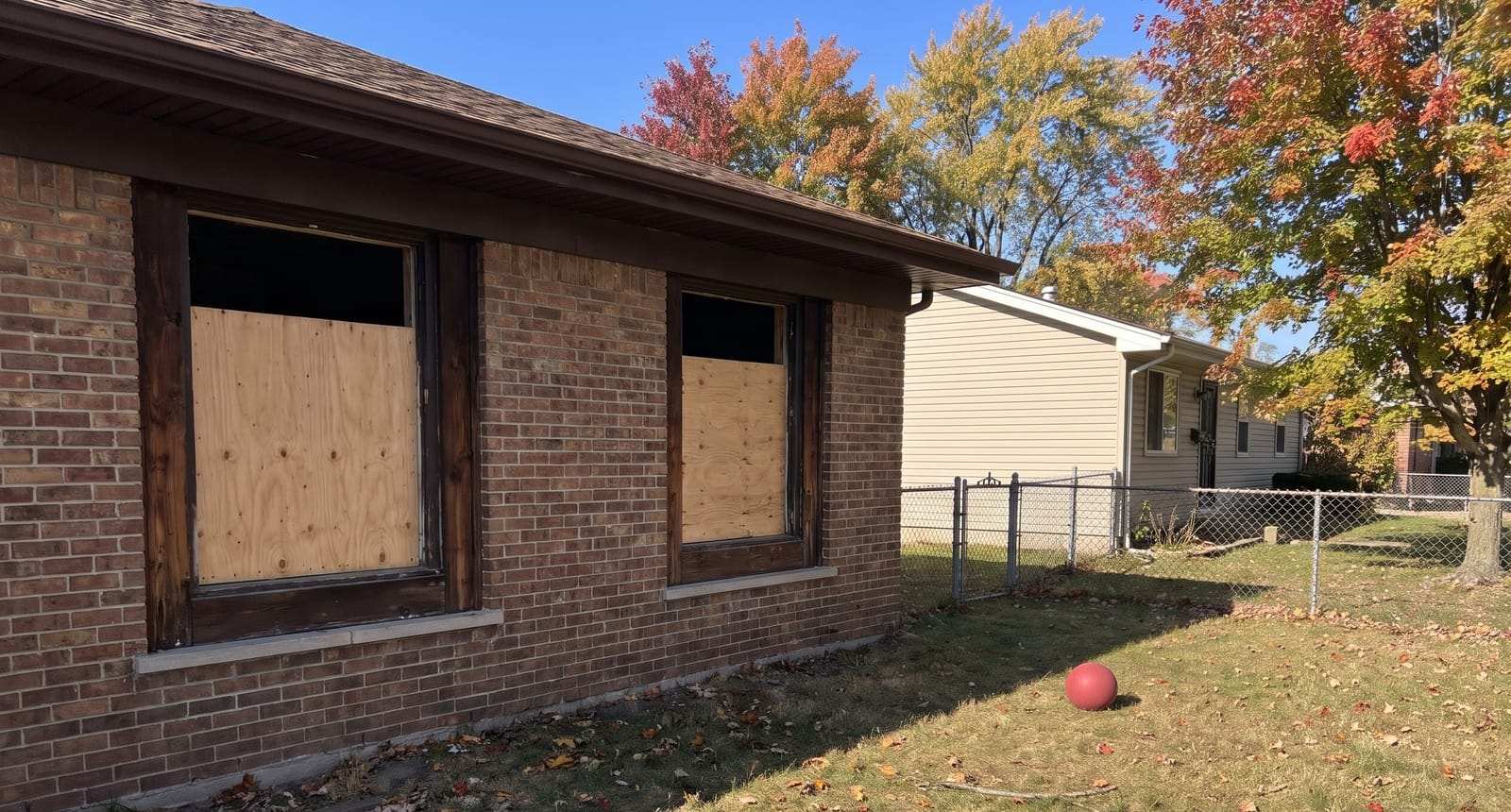
Wind, hail and falling branches open a building to the weather: a broken window, a damaged door, a hole in the roof or siding. Closing that opening comes first. Board-up covers broken windows and doors with plywood, and on a damaged roof the trade usually secures a tarp until the roof itself is repaired.
The water that came in is then treated like any other water damage, with extraction, moisture readings and structural drying. Chicago’s heavy summer storms can do both kinds of damage at once: rain through a broken window upstairs and a floor drain backing up in the basement.
Once the structure reads dry, we rebuild the walls, floors and ceilings that had to come out. While water is still getting in through the opening, the first call is for emergency service.
Water, fire, mold or storm, the first job is finding out how far the damage went.