
Inspections That Catch Moisture and Damage Early
Moisture usually spreads farther than the stain that gives it away. An inspection traces it through walls, floors and ceilings with moisture meters, so a slow problem can be handled while it is still small.
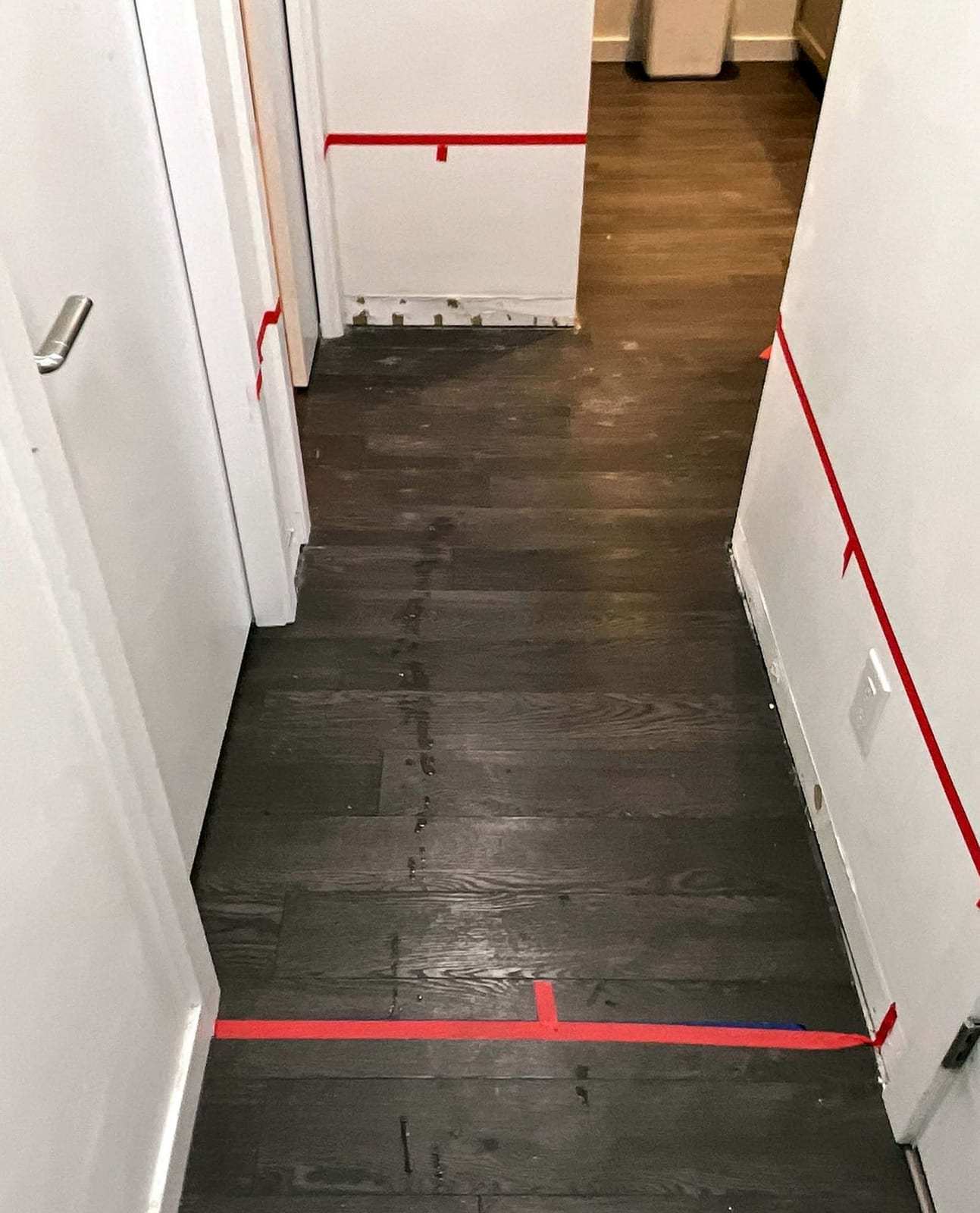
Moisture Travels Farther Than the Stain Shows
Water does not stay where it lands. It wicks up drywall from the floor, runs along joists and pipes and spreads under flooring, so the wet area inside a building is usually larger than anything on the surface. A wall can look and feel dry while the drywall at its base reads wet.
An inspection is how we find that hidden part. Moisture meters read through drywall, plaster, wood and flooring, and each reading is compared with a dry area of the same material elsewhere in the building. Where the readings run high, the edges of the wet area are often marked with tape. The trade calls this moisture mapping, and it turns a guess into a picture of where the water went.
Like every visit we make, an inspection is done in person by Brian Cox, our owner. A slow leak found this way usually means drying; the same leak found months later often means tear-out.
The Inspection That Fits What You Have Noticed
Most inspections start from something a property owner has seen or smelled, or from a moment when water is likely to have come in. Each kind looks in different places.
| Inspection type | What is checked | Good time to book it |
|---|---|---|
| Moisture inspection | Walls, floors and ceilings around a suspected leak, read with moisture meters and compared with dry areas | When a stain grows, or after a leak that was stopped but never opened up |
| Post-storm check | Basement walls and floor drains, ceilings under the roof, and the walls and windows that took wind-driven rain | In the days after a heavy storm, or after a basement drain backed up |
| Mold inspection | Visible growth, musty odor and the moisture feeding it, with readings to show how far the damp reaches | When a musty smell lingers, or growth returns after cleaning |
| Post-repair drying check | Framing, subfloor and remaining drywall after a water job, read against dry areas before anything is closed up | Before new drywall, insulation or flooring goes in |
| Basement and crawlspace check | Foundation walls, the floor around drains and the water heater, the underside of the first floor, and marks left by past water | Before a basement is finished, or when water has come in before |
Booking an inspection starts with what you have noticed and where.
Basements Are Read From the Floor Up
Many Chicago bungalows and two-flats have finished basements with a floor drain, and a heavy summer storm can push water back up that drain through the combined sewer. Even after the water is pumped out, the base of the drywall, the carpet padding and the framing behind a finished wall can stay wet for a long time.
A basement check reads those places from the floor up: the base of every wall, the floor around the drain, the corners behind furniture and the stud wall built in front of the foundation. When the readings are highest near the floor and fall off farther up the wall, the water usually wicked up from below.

Foundation walls tell their own story. A white, powdery residue on concrete or block, which the trade calls efflorescence, shows where water has passed through the wall over time. It is worth knowing about before a basement is finished, because new drywall over a damp foundation tends to repeat the problem.
Rings Around Vents and Fixtures Point to the Source

A brown ring around a ceiling vent or a light fixture is easy to paint over and easy to misread. The water may be condensation forming on a duct that runs through an attic or another unconditioned space, a slow leak traveling along the duct from somewhere else, or a roof or plumbing leak that found the nearest opening.
Readings around the ring sort that out. High readings in a tight circle around the vent point to condensation at the duct, while a wet path that runs off along a joist points to a leak farther upstream. Marking the high readings with tape shows the shape of the wet area before anything is cut.
Where an Inspection Ends and a Repair Begins
How is an inspection different from a repair?
An inspection finds out what is going on: where the moisture is, how far it has spread and what is feeding it. A repair fixes what the damage left behind. Sometimes an inspection shows that nothing needs doing; other times it becomes the first step of a drying or repair job.
Does an inspection mean opening up walls?
Usually not. Moisture meters read through drywall, plaster and flooring, so an inspection leaves the surfaces as they are. Opening a wall belongs to the drying or repair plan, which comes after the readings.
Is an inspection worth booking after the leak is fixed?
Often, yes. Stopping a leak stops new water, but whatever soaked into the drywall, insulation or subfloor stays there until it dries or is removed. Readings show whether it dried out on its own or is still sitting in the wall.
Can an inspection tell whether mold is growing behind a wall?
It can show whether the wall is wet enough for mold to grow and where that moisture comes from, and a musty odor or visible growth is part of the check. Finding and stopping the moisture source is where any mold work has to start.
Signs That Moisture Is Working Out of Sight
None of these proves there is a leak, but each one is worth a set of readings.
- A musty odor that lingers in a room, a closet or the basement
- Paint that peels, bubbles or blisters on a wall or ceiling
- Ceiling stains, or a ring around a vent or light fixture
- Floors that warp, cup, buckle or feel soft underfoot
- Damp basement walls, or a white, powdery residue on the foundation
- Condensation that keeps coming back on windows, pipes or ducts
- Baseboards that swell or pull away from the wall
A musty smell or a stain that keeps growing is reason enough to call and ask.